Introduction
Coffee preparation has undergone a significant transformation over the past two decades, particularly with the rise of single-serve brewing systems. The Keurig K-Slim represents one approach to this modern coffee landscape, offering a compact machine designed for those seeking convenience without sacrificing counter space. Understanding what this machine does, how it works, and whether it aligns with your lifestyle requires looking beyond marketing claims and examining the actual mechanics and practical applications.
The Keurig K-Slim in Twilight Blue has gained attention in households and offices where brewing volume and frequency vary throughout the day. Rather than approaching this as a definitive answer for all coffee drinkers, this guide examines the specific characteristics that make single-serve pod brewing appealing to certain lifestyles and use cases, while also acknowledging the considerations that matter when evaluating whether this type of system works for you.
Understanding Single-Serve Pod Coffee Brewing
Before diving into the specifics of the K-Slim model, it helps to understand the broader category of single-serve coffee makers and how they function. Pod-based brewing systems work by forcing hot water through a pre-measured amount of ground coffee contained in a small pod or capsule. The entire brewing process typically takes just a few minutes from button press to finished cup.
The concept emerged from the desire to streamline morning routines and eliminate the variables that come with traditional brewing methods. No measuring, no timing, and no cleanup beyond disposing of the used pod characterizes the appeal for many users. The standardization of the brewing process also means that each cup theoretically delivers consistent results, assuming consistent water quality and machine maintenance.
K-Cup pods, which the K-Slim uses, represent a specific technical standard that has become widely available across major brands and retailers. This availability is significant because it affects both your everyday convenience and the long-term practicality of owning a machine that uses this format.
Key Features and Technical Specifications
Compact Design and Footprint
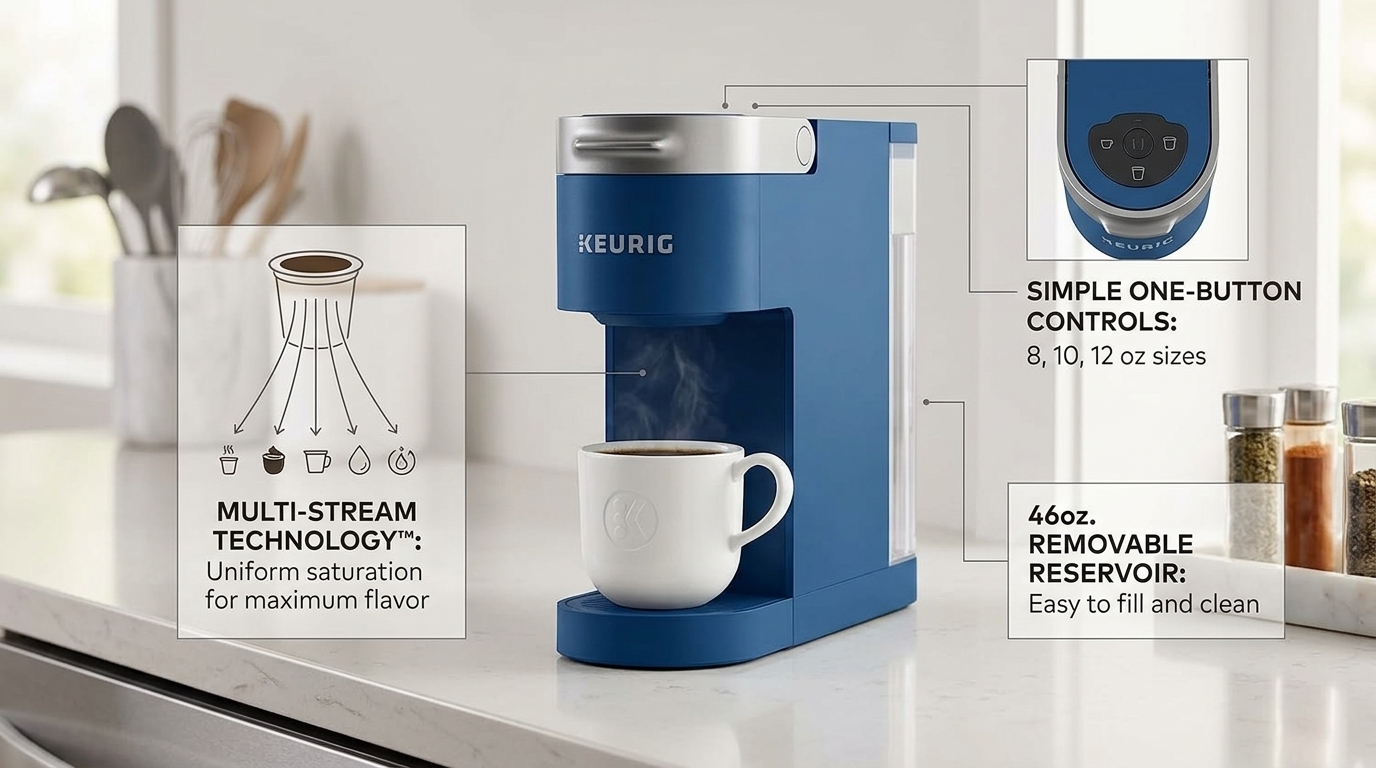
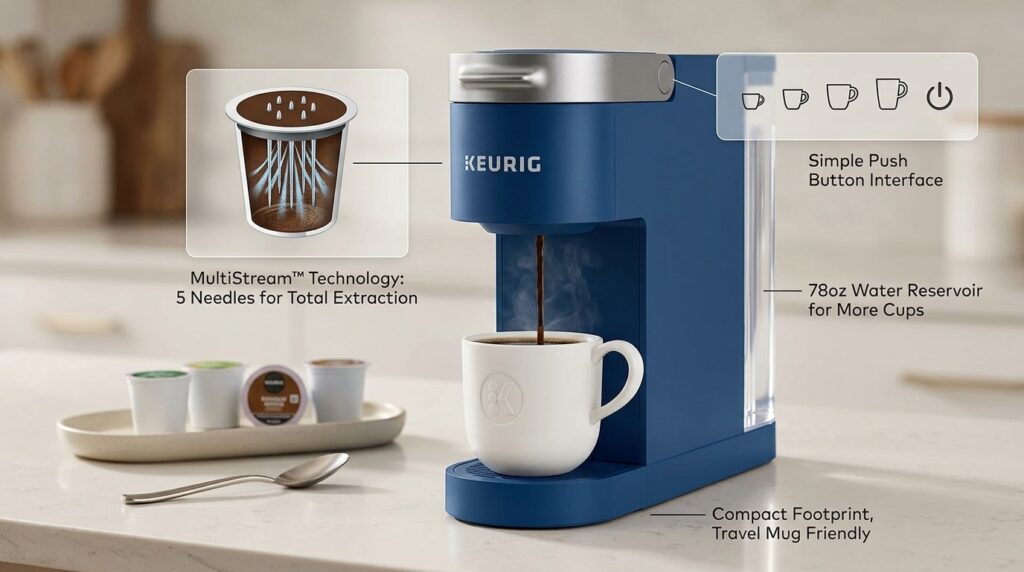
The defining characteristic that earned this model the “Slim” designation is its smaller profile compared to other machines in Keurig’s lineup. For people working with limited counter space—whether in apartments, dorm rooms, small offices, or kitchen nooks—physical size matters considerably. A machine that occupies less real estate becomes more practical for everyday use rather than something that needs to be stored away between uses.
The Twilight Blue finish represents an aesthetic choice that differs from the standard black or white options found on many machines. This matters if the machine will remain on display rather than tucked away, as color coordination with kitchen décor influences whether a machine becomes an eyesore or a neutral appliance presence.
Push Button Controls
The K-Slim features straightforward push button operation rather than more complex digital interfaces. This design choice has practical implications. Simpler controls mean fewer components to potentially malfunction and a lower learning curve for anyone using the machine. Whether you’re the primary user or the machine gets used by family members, guests, or coworkers, button-based operation doesn’t require instruction manuals for basic use.
The control layout determines how quickly you can go from decision to finished coffee. A machine with confusing button combinations or unclear labeling creates friction in the morning routine, whereas intuitive placement reduces decision fatigue.
MultiStream Technology
Keurig’s MultiStream technology represents the company’s approach to improving water distribution during the brewing process. Rather than a single stream of water passing through the pod, multiple streams aim to achieve more even saturation of the grounds and more thorough extraction.
This matters because uneven water distribution can result in some grounds over-extracting while others under-extract, potentially creating bitter or weak flavors. By distributing water more evenly across the pod’s contents, the goal is to achieve more consistent extraction and, theoretically, better-tasting results compared to previous Keurig generations.
Water Reservoir and Capacity
Single-serve machines require regular refilling if used multiple times daily. The K-Slim’s reservoir size determines how many brews you can complete before needing to fill it again. For solo drinkers or those who brew once or twice daily, reservoir size matters less. For offices or households where multiple people brew throughout the day, a larger reservoir reduces the frequency of refilling tasks.
Brew Size Options
Most modern single-serve machines, including the K-Slim, offer multiple cup size selections. The ability to brew smaller amounts for concentrated espresso-style drinks or larger amounts for traditional mugs gives you flexibility based on the time of day or personal preference. Brew selection typically ranges from around six ounces up to twelve ounces or more.
Temperature and Brewing Time
The machine heats water to appropriate temperatures for extracting flavor from ground coffee. Actual brewing time is one of the primary advantages of this system category—most brews complete within two to three minutes from button press to drinkable coffee, significantly faster than traditional drip coffee makers waiting for a full pot to brew.
How the K-Slim Fits Into Daily Coffee Routines
Weekday Morning Scenarios
For someone with a consistent weekday routine, a single-serve machine operates differently than traditional brewing. You don’t need to brew a full pot and worry about coffee sitting on a warming plate all morning. Instead, each person (or each brewing) gets a fresh cup made on demand.
In households where people wake at different times or prefer different coffee strengths, single-serve machines eliminate the negotiation of full-pot decisions. One person can have their coffee ready in minutes without affecting anyone else’s morning schedule.
Variable Usage Patterns
The K-Slim’s compact size makes it practical for spaces where a machine might serve occasional rather than daily needs. Someone who drinks coffee several times weekly but not daily has less concern about wasting energy or resources compared to brewing full pots that might be discarded.
Weekend entertaining presents another use case where single-serve brewing shines. When hosting a small gathering, you can brew each guest’s coffee to their specific preference—different strengths, different cup sizes—without managing multiple brewing vessels.
Office and Workplace Settings
In workplace environments where many people share kitchen facilities, single-serve machines offer advantages. Different preferences (regular coffee, decaffeinated, specialty blends) can all be accommodated without storing multiple brewing devices or managing shared pots. The quick brewing time means people don’t need to wait extended periods for morning coffee.
Experimentation and Variety
The K-Cup format includes extensive variety in coffee types, brands, and styles. Beyond traditional coffee, K-Cups encompass specialty beverages, different roast levels, and international varieties. For someone interested in exploring different coffee profiles without committing to full bags of beans, the pod format enables experimentation.
Who Might Find This Machine Suitable
Urban and Space-Constrained Living
Anyone living in smaller spaces—apartments, studios, or homes with limited kitchen real estate—benefits from appliances that minimize footprint. The K-Slim’s compact design addresses this constraint without sacrificing basic functionality.
Solo Drinkers
Individuals who live alone and drink coffee regularly find single-serve machines more practical than brewing full pots. There’s no waste from unused coffee, no daily commitment to drinking multiple cups, and no need for a carafe taking up storage space.
Households With Diverse Preferences
Families where different members prefer different coffee types, strengths, or even non-coffee beverages benefit from the flexibility that single-serve brewing provides. Morning routines run smoother when everyone can make their exact preference without negotiation or sacrifice.
Routine-Oriented People
Those who appreciate consistent, predictable processes enjoy the reliability of single-serve machines. The absence of variables that come with manual brewing—measuring grounds, managing water temperature, timing extraction—appeals to people who value consistency and simplicity.
Casual Coffee Drinkers
Not everyone is passionate about coffee as a hobby. Some people want decent coffee without learning brewing techniques or investing in specialty equipment. Single-serve machines serve this segment by delivering acceptable coffee through a simple, repeatable process.
People With Mobility or Physical Limitations
Simplified operation and reduced physical demands make single-serve machines practical for people with arthritis, limited mobility, or strength constraints. No lifting heavy carafe, no managing hot water carefully, and no complex equipment translates to safer, more comfortable use.
Important Considerations and Limitations
Pod Waste and Environmental Impact
K-Cup pods represent single-use plastic products that generate waste. While the industry has moved toward recyclable materials, most single-use pods still end up in landfills. If environmental impact significantly influences your purchasing decisions, this is a substantive consideration.
Reusable pod options exist and work with most machines, but they require rinsing, drying, and filling—which reintroduces some of the labor that single-serve brewing aims to eliminate. The trade-off between convenience and waste depends on your personal priorities.
Coffee Quality and Flavor Variables
Single-serve machines provide consistency and convenience, but coffee enthusiasts often note that pod-based brewing doesn’t match the flexibility and quality potential of pour-over, French press, or espresso methods. The coffee you get is dependent on the quality of the specific pods you purchase.
Not all K-Cup manufacturers maintain identical quality standards. Price variations across different pod brands correlate somewhat with quality, but at a certain point, you’re paying for premium brands rather than consistently getting superior flavor.
Per-Cup Economics
While single-serve machines offer convenience, the cost per cup of coffee from K-Cup pods typically exceeds the per-cup cost of ground coffee or whole beans used in traditional brewing. For high-volume drinkers, this difference accumulates significantly over time.
Machine Maintenance and Descaling
Like all machines that deal with water and heat, single-serve brewers require periodic cleaning and descaling to prevent mineral buildup that affects performance and flavor. The K-Slim, like most Keurig machines, benefits from occasional descaling to maintain optimal function.
Water Quality Dependency
The quality of water going into your machine affects both the taste of the final coffee and the machine’s longevity. Hard water leads to faster mineral accumulation and potential scaling issues. Using filtered water or maintaining a descaling routine addresses this, but it adds a maintenance consideration.
Initial Investment
Single-serve machines represent an upfront investment that doesn’t immediately pay for itself through savings on individual cups, especially if comparing to budget-friendly brewing methods like automatic drip machines or French presses.
Limited Brew Customization
While single-serve machines produce consistent results, they offer limited ability to adjust variables that affect coffee extraction. You can’t modify water temperature, adjust contact time, or experiment with brewing parameters the way you can with more manual methods.
Comparing Single-Serve Pod Systems to Other Brewing Methods
Versus Automatic Drip Coffee Makers
Traditional drip machines typically cost less initially and deliver lower per-cup costs if you drink multiple cups daily. They require more active planning—you need to brew a full pot, which means deciding in advance how much coffee you’ll drink. Cleanup involves washing a carafe and filter, but no pod disposal.
Drip machines work well for households where multiple people want coffee at the same time or where someone drinks several cups in quick succession. Single-serve machines excel when usage patterns are unpredictable or preferences vary.
Versus French Press and Manual Methods
Manual brewing methods offer maximum control over variables affecting the final cup and often produce coffee that enthusiasts prefer. These methods require more active participation and cleanup effort. They appeal to people who view coffee preparation as a satisfying ritual rather than a task to minimize.
Single-serve machines appeal to people prioritizing speed and simplicity over the full involvement that manual methods require.
Versus Espresso Machines
Dedicated espresso machines produce a completely different product with different characteristics and uses. They require significant skill development, more intensive maintenance, and higher initial investment. If you specifically want espresso or espresso-based drinks, single-serve pod machines don’t adequately substitute.
Versus Instant Coffee
Instant coffee requires minimal equipment and effort, but the flavor profile and mouthfeel differ significantly from brewed coffee. Single-serve machines offer a middle ground—more convenient than traditional brewing but producing results substantially closer to freshly brewed coffee.
Understanding K-Cup Pod Compatibility
The K-Slim works with standard K-Cup pods, which means you have access to an extensive range of options from major coffee manufacturers, supermarket brands, and specialty coffee companies. This variety is a practical advantage compared to proprietary pod systems that limit your choices.
However, compatibility isn’t absolute. Some third-party pods work inconsistently in older Keurig machines, and certain pod designs may not seat properly in all machines. Testing different brands helps identify which work reliably in your specific machine.
The availability of decaffeinated options means you’re not limited to regular coffee, and the range of roast styles and origins means you can adjust the flavor profile without changing machines.
Maintaining Optimal Performance
Regular descaling—removing mineral buildup from the internal water lines—keeps the machine functioning properly and ensures consistent results. Most machines alert you when descaling is needed, typically every three to six months depending on water hardness.
Cleaning the water reservoir periodically and wiping the exterior keeps the machine hygienic and functional. The drip tray should be emptied regularly to prevent overflow issues.
K-Cup compatibility includes a needle that punctures the pod. This needle occasionally needs attention if pod material clogs it, which can affect brewing quality.
Frequently Asked Questions
How long does it take to brew a cup of coffee in the K-Slim?
Most brews complete in approximately two to three minutes from the time you insert the pod and press the button, depending on the cup size selected and water temperature.
Can I use reusable K-Cups in the K-Slim?
Yes, reusable pod options are available and compatible with Keurig machines, allowing you to use ground coffee of your choice while maintaining the convenience of single-serve brewing.
What cup sizes can the K-Slim brew?
The specific brew sizes available typically range from approximately six ounces to twelve ounces, though the exact options depend on the model year and configuration.
Is the Twilight Blue color just aesthetic, or does it affect function?
The color is purely aesthetic and doesn’t affect how the machine operates or performs.
How often does the K-Slim need descaling?
Frequency depends on water hardness in your area. Most machines need descaling every three to six months, though harder water requires more frequent attention.
What should I do if the machine isn’t brewing?
Common issues include clogged needles, mineral buildup requiring descaling, or air pockets in the water lines. Running descaling cycles or gently cleaning the needle opening often resolves these issues.
Can I brew other beverages besides coffee?
K-Cups include options beyond traditional coffee, including tea, hot chocolate, and specialty beverages. You can also use reusable pods to brew your preferred beverages.
Is the reservoir removable for easy filling and cleaning?
Yes, removable reservoirs allow you to fill and clean without maneuvering around the machine itself, making maintenance more straightforward.
How much storage space do K-Cups require?
An average household using multiple pod varieties might store thirty to fifty pods. A small cabinet shelf or dedicated drawer typically accommodates this without taking significant kitchen real estate.
What’s the electricity usage of a single-serve machine?
Single-serve machines draw electricity primarily during the heating cycle. Because they’re heating smaller amounts of water than drip machines, they typically consume less total energy per cup despite being on-demand devices.
Conclusion
The Keurig K-Slim represents a particular approach to coffee preparation that prioritizes convenience, simplicity, and compact design. Whether this approach aligns with your needs, preferences, and values depends on multiple factors unique to your situation and lifestyle.
The machine excels for people who value time efficiency, appreciate consistency, live in space-constrained environments, or have unpredictable daily schedules. It works well for households with diverse coffee preferences and for anyone who wants coffee on-demand without the complexity of traditional brewing methods.
The trade-offs involve the environmental impact of pod consumption, the higher per-cup cost compared to bulk coffee, and the acceptance that you’re choosing convenience and consistency over the full flavor potential that more involved brewing methods can deliver.
The Twilight Blue color option provides aesthetic flexibility beyond standard machine finishes, allowing the machine to integrate into kitchen design preferences if it remains on the counter rather than hidden in a cabinet.
Evaluating whether this machine makes sense for you requires honest assessment of your actual coffee consumption patterns, your budget for ongoing pod purchases, the importance you place on environmental considerations, and how much simplicity is worth to you relative to other brewing options.