Introduction
Creating a functional kitchen space in a small apartment, dorm room, or compact kitchen presents unique challenges. Many people find themselves working with limited counter and storage space, yet they still want access to the conveniences that modern kitchen appliances provide. The combination of a compact microwave oven and a single-serve coffee maker offers a practical solution for those seeking efficiency without sacrificing functionality or style.
Retro-styled appliances have experienced a resurgence in recent years, appealing to people who appreciate vintage design aesthetics alongside contemporary performance. Meanwhile, single-serve coffee makers have become increasingly popular as consumers seek convenience and the ability to brew exactly what they need without waste or complicated processes. When paired together, these two appliances can address many everyday kitchen needs—from quick meal preparation to morning beverage routines.
This article explores how these compact kitchen solutions work individually and together, what features they offer, and how they might fit into your home and lifestyle. Whether you’re furnishing a new space or upgrading your current kitchen setup, understanding the capabilities and considerations of these appliances will help you make an informed decision.
Understanding Compact Microwave Ovens
What Makes a Microwave “Compact”?
Compact microwave ovens typically range from 0.6 to 0.9 cubic feet in capacity, which is notably smaller than standard full-sized models that often exceed 1.2 cubic feet. A 0.7 cubic foot microwave represents a middle ground in this category—large enough to handle most common cooking tasks while remaining space-efficient enough for countertops where real estate is at a premium.
The physical dimensions of a compact unit usually measure around 17 to 19 inches wide, 15 inches deep, and 12 inches tall, though exact measurements vary by model. This footprint is considerably smaller than larger microwaves and allows for more flexible placement options throughout your kitchen.
How Wattage Affects Performance
Wattage is one of the most important specifications to understand when evaluating microwave ovens. A 700-watt microwave represents a mid-range power level. To put this in context, older microwave models often operated at 500 to 600 watts, while full-sized modern microwaves frequently reach 1000 watts or higher.
The wattage directly correlates with how quickly the microwave heats food. A 700-watt unit will heat and cook food somewhat faster than lower-wattage models but may require slightly longer than high-powered alternatives. This is still adequate for most common microwave tasks, including reheating beverages, preparing frozen meals, and cooking fresh vegetables. For most people engaging in routine kitchen activities, 700 watts provides a reasonable balance between speed and energy efficiency.
Retro Design in Modern Kitchens
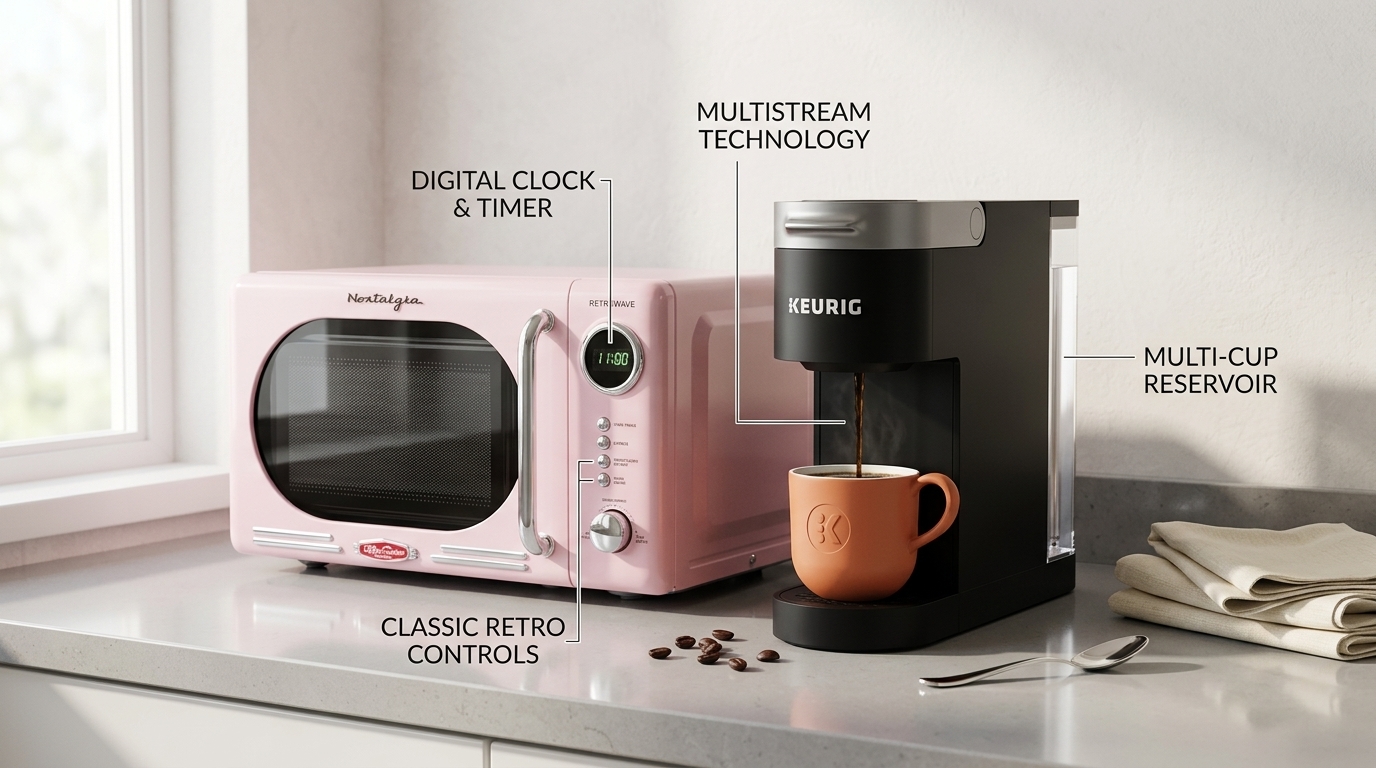
Retro styling has become a legitimate design trend rather than simply nostalgic nostalgia. Modern kitchens that incorporate vintage-inspired appliances often appeal to people who value both form and function. Retro microwaves typically feature curved edges, solid colors like avocado, turquoise, or classic black, and sometimes include chrome accents and rounded knobs rather than digital touch panels.
One practical advantage of retro-styled appliances is that they remain visually distinct on your countertop. They can serve as a design focal point or complement other vintage kitchen elements without requiring a full commitment to a specific era. The aesthetic consistency that comes with choosing appliances from a retro-inspired product line creates a more intentional look than mixing entirely disparate styles.
The Role of Single-Serve Coffee Makers in Daily Life
The Evolution of Coffee Brewing Technology
Single-serve coffee makers transformed how many people approach their morning beverage routine. Rather than brewing an entire pot of coffee—which may go to waste if you live alone or have variable coffee-drinking habits—these machines brew individual cups on demand. This approach reduces waste, saves time, and allows household members with different coffee preferences to easily prepare exactly what they want.
The single-serve market includes various brewing methods, from pod-based systems to pour-over mechanisms. Pod-based systems, particularly those using proprietary cartridges, have dominated consumer interest because they eliminate the need to measure grounds, fill filters, or clean complicated brewing components. Users simply insert a pod, add water, and press a button.
Understanding K-Cup Pod Technology
K-Cup pods represent a specific type of single-serve coffee cartridge. These small cups contain pre-measured amounts of ground coffee, filtered for optimal flavor extraction. The coffee inside is sealed in a breathable material that keeps it fresh while allowing the hot water inside the brewer to extract the flavors effectively.
The term “K-Cup” originated from Keurig, the company that pioneered this technology, though numerous compatible pod options now exist from different coffee brands and roasters. The availability of these compatible options means you’re not limited to a single brand’s offerings. You can experiment with different coffee roasts, origins, and flavor profiles while using the same brewing equipment.
Multistream Technology Explained
Multistream technology refers to the method by which hot water is delivered to the coffee grounds inside the pod. Rather than a single stream of water entering the pod, multistream systems use multiple puncture points or distribution channels. This allows water to pass through the grounds more evenly and thoroughly, theoretically extracting flavors more uniformly and efficiently.
In practical terms, multistream technology can result in a more balanced cup of coffee with better flavor extraction compared to single-stream alternatives. The technology is particularly useful for people who experiment with different coffee types, as it helps ensure that each brewing method—whether you’re using light roasts, flavored pods, or decaf options—extracts consistently.
Compact Brewer Benefits
A “slim” or compact coffee maker designation indicates a model with a smaller footprint than standard brewers. Some full-sized single-serve brewers include water reservoirs, additional brewing features, and cup-warming capabilities that make them quite substantial. Compact models eliminate these extra features to focus on the core brewing function.
The advantage of a slim design is obvious: it takes up less countertop space. This makes it ideal for apartments, small kitchens, dorm rooms, or shared office spaces. Additionally, compact brewers are typically lighter and easier to move, which proves helpful during cleaning or if you prefer to store your coffee maker and pull it out only when needed.
Key Features of These Appliances
Microwave Features and Specifications
The 0.7 cubic foot capacity provides adequate space for most standard plates, bowls, and containers. You can comfortably heat a large mug of liquid, prepare a frozen entree for one or two people, or warm up several items in sequence without running into size restrictions. The interior is large enough for experimentation but compact enough to maintain the unit’s small footprint.
Power levels on most microwave ovens, including compact models, typically include multiple settings rather than just a single full-power option. This allows you to reduce the microwave power for delicate tasks like melting chocolate or warming up items that might otherwise cook unevenly at full strength. Most compact microwaves include preset buttons for common tasks like popcorn, beverages, and frozen items, though you can also manually input cooking times and power levels.
Defrost functions use lower power levels and cycling patterns specifically designed to thaw frozen food more evenly than simply running the microwave on full power for an extended time. This proves especially useful if you prefer to thaw items quickly but still want to maintain quality. Some models include express defrost options based on weight, while others require manual input.
Timer and indicator lights help you monitor your food’s progress. Sound notifications alert you when cooking is complete, which is useful if you step away from the kitchen. Some compact models feature add-30-second buttons that let you quickly extend cooking time without reopening the microwave and manually entering a new time, a convenience for situations when your food needs just a bit more time.
Coffee Maker Features and Technology
The K-Slim model is designed around simplicity and reliability. The water reservoir, usually located at the back or side of the unit, is large enough to brew multiple cups throughout the day without constant refilling. The specific capacity varies, but most single-serve brewers accommodate enough water for 4 to 6 full cups before requiring a refill.
Temperature control is essential for proper coffee extraction. Multistream brewers are engineered to reach and maintain the optimal brewing temperature, which ranges between 195 and 205 degrees Fahrenheit for most coffee applications. This temperature range is hot enough to extract flavors from the ground coffee but not so hot that it burns the grounds or creates an unpleasant bitter taste.
Brew time on compact single-serve models is typically quite fast—usually between 60 and 90 seconds from the moment you press the start button. This rapid brewing time appeals to people with busy mornings or those who want a quick caffeine boost between tasks throughout the day.
The water filtration in the reservoir helps reduce chlorine and other impurities that might affect taste. Depending on your local water quality, this filtration can make a noticeable difference in your final cup. Regularly replacing the water filter—typically recommended every 2 months for average use—maintains this filtration effectiveness.
One practical consideration is the cup size compatibility. Most K-Cup brewers can accommodate various cup sizes, from small espresso-style cups (6 ounces) up to standard mugs (12 ounces) and larger travel mugs or thermoses. The brewer’s height and the positioning of the drip tray determine what sizes actually fit, so it’s worth checking the specific dimensions if you prefer to brew into specific cup styles.
How These Appliances Work in Your Kitchen
Quick Breakfast and Snack Preparation
The combination of a compact microwave and single-serve coffee maker handles most morning routines efficiently. You can brew a perfect cup of coffee in under two minutes while simultaneously using the microwave to warm a croissant, bagel, or breakfast sandwich. For people who sleep until the last minute and rush out the door, this parallel processing saves significant time.
Breakfast items like eggs, oatmeal, or mug cakes can be prepared in the microwave in just a few minutes. Scrambled eggs, which many people find daunting to cook on stovetops, cook evenly and consistently in the microwave when done in short intervals with stirring. Instant oatmeal and other single-serving breakfast foods work perfectly in a 0.7 cubic foot microwave since you’re typically preparing small portions.
Lunch and Light Meal Solutions
During lunch, these appliances shine for busy professionals or students. Microwaves have long been the solution for reheating leftovers, and a compact model performs this function just as effectively as larger alternatives. Frozen meals, leftovers from the previous evening, or prepared lunch components can be ready to eat in minutes.
For people who work from home, maintaining a coffee station in your office or workspace means you’re not constantly walking to the main kitchen. A slim coffee maker takes up minimal space on a desk or side table and ensures you always have fresh coffee available without the hassle of larger brewing equipment. Pairing this with a compact microwave means you can prepare light meals or snacks during work breaks without leaving your workspace.
Beverage Preparation Beyond Coffee
While the Keurig system is primarily known for coffee, many people use it for hot chocolate, tea, and other single-serve beverages. The multistream technology works with any pod type that fits the K-Cup standard. If coffee isn’t your only beverage choice, or if household members have different preferences, the pod system’s versatility becomes apparent.
The microwave handles beverages as well, though perhaps less elegantly. Heating water for tea, making hot chocolate from scratch, or warming up pre-made beverages all work in the microwave. Some people prefer the microwave for these purposes since it doesn’t require maintaining a separate brewing system, though others appreciate the consistency and convenience that the coffee maker provides.
Ideal Users and Living Situations
Apartment Dwellers and Small Space Enthusiasts
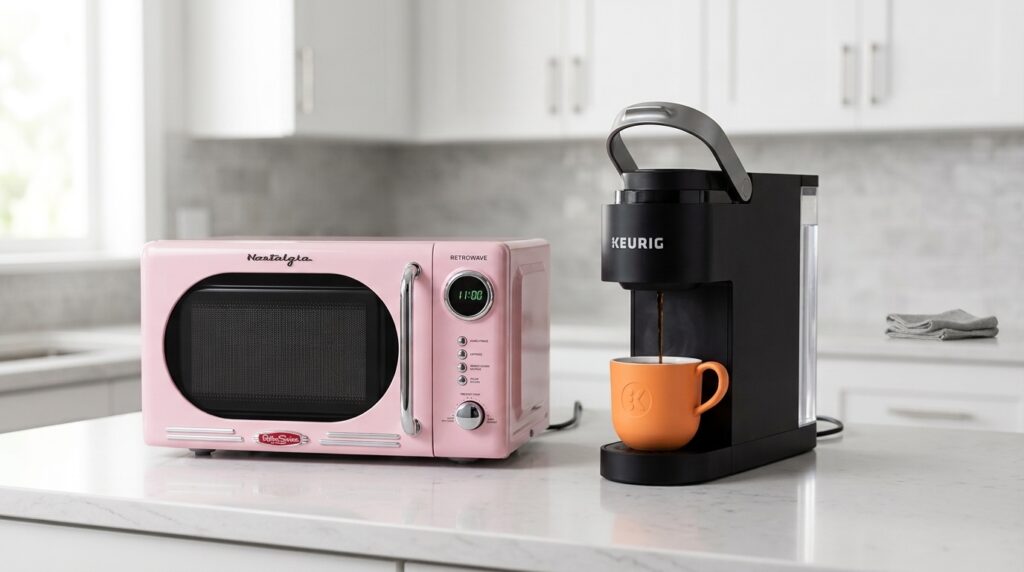
Apartments with modest kitchens benefit tremendously from compact, multi-functional appliance arrangements. Every square inch of countertop matters when you’re working with limited space. These two appliances together take up roughly the same footprint as a single full-sized microwave or coffee maker, yet they provide functionality that would otherwise require multiple larger units.
The visual appeal of retro-styled appliances also matters in apartments where your kitchen is visible from living areas. A well-designed kitchen contributes to the overall aesthetics of your living space, which is particularly relevant in open floor plans common in modern apartments.
Students in Dorms and Temporary Housing
College students and people in temporary housing situations often need kitchen solutions that are portable and space-efficient. Dorm rooms typically include very limited counter space, and many have restrictions on what kitchen equipment is permitted. Compact microwave and coffee maker combinations fit within the typical parameters of college housing policies.
The durability of these appliances matters in student environments where equipment might be moved frequently or shared with roommates. Both retro microwaves and K-Cup brewers are designed to withstand regular use and aren’t so delicate that casual handling poses serious risks.
Remote Workers and Home-Based Professionals
People who work from home often establish coffee stations separate from their main kitchen. A compact coffee maker allows for continuous beverage access during work hours. A small microwave can be positioned in or near a home office to handle snacks and light lunch preparations without requiring trips to the main kitchen throughout the day.
Busy Professionals Seeking Convenience
For employed individuals with hectic schedules, morning efficiency is paramount. The time saved by using a single-serve coffee maker rather than brewing a full pot or stopping at a coffee shop adds up across weeks and months. Similarly, the microwave’s speed for breakfast and lunch preparation appeals to people who prioritize convenience.
Eco-Conscious Consumers with Caveats
Some people are attracted to compact appliances because they consume less energy than larger models. A 700-watt microwave uses less total energy than a 1200-watt model, particularly if you’re only preparing small quantities. Single-serve brewers brew exactly what you need rather than potentially wasting brewed coffee.
However, it’s worth noting that single-use pods do generate plastic waste, which concerns environmentally conscious consumers. Many coffee brands now offer compostable or recyclable pod options, and some companies provide mail-back recycling programs. If environmental impact is important to you, researching these alternatives ensures your choice aligns with your values.
Important Considerations Before Purchasing
Understanding Microwave Safety and Use
Microwave ovens operate by using electromagnetic waves to excite water molecules in food, generating heat from within the food itself. This mechanism is fundamentally safe and has been thoroughly studied and regulated. However, proper usage ensures optimal safety and longevity.
Never operate a microwave empty, as the electromagnetic energy needs something to absorb it. Running an empty microwave can damage the magnetron, which is the component that generates the waves. Always ensure there’s food or liquid inside before turning on the microwave.
Certain container types aren’t suitable for microwave use. Metal containers, including those with metallic paint or trim, should never go in a microwave as they can cause arcing (visible sparks). Some plastics aren’t heat-safe and can leach chemicals into food when heated. Glass containers specifically marked as microwave-safe work well, as do most ceramics and dishes without metallic elements.
Water Quality and Coffee Maker Maintenance
The quality of water you use in any coffee maker significantly impacts both the taste of your coffee and the longevity of the equipment. Hard water, which contains high levels of mineral content, can cause buildup inside the brewing mechanism over time. This buildup, called scaling, reduces the efficiency of the heating element and can shorten the appliance’s lifespan.
If you have hard water, using filtered water or distilled water in your coffee maker extends its life considerably. Alternatively, periodic descaling—using a commercial descaling solution or citric acid—removes mineral buildup and maintains performance. Most manufacturers recommend descaling every 3 to 6 months depending on your water hardness.
The water reservoir should be emptied regularly if you don’t use the coffee maker daily. Stagnant water can develop bacterial growth or mineral deposits. Rinsing out the reservoir weekly and allowing it to air dry prevents these issues.
Energy Consumption and Utility Costs
Both appliances draw power when operating, and understanding their typical energy consumption helps you budget accordingly. Microwave ovens use significant wattage only while actively running—they draw minimal power when idle. A 700-watt microwave used for 20 minutes daily consumes roughly 140 watt-hours of energy per day, or about 4.2 kilowatt-hours monthly.
Single-serve coffee makers vary in energy consumption based on how many times you brew daily. Most use between 500 and 1500 watts while actively brewing. If you brew one cup daily, you might use approximately 0.75 to 1.5 kilowatt-hours monthly. Many modern models also feature auto-shutoff after a period of inactivity, reducing standby power consumption.
In most regions, these energy consumption levels result in modest increases to your electricity bill. The real cost benefit comes from reduced spending on takeout coffee and meals, which typically far exceeds the appliances’ operational costs.
Space Considerations and Placement
Before purchasing, honestly assess your available counter space. These appliances require not just space for themselves but adequate clearance for proper operation and heat dissipation. Microwaves should have several inches of clearance on all sides, particularly on top and on the vents (usually on the back or sides). Coffee makers need sufficient clearance for opening the water reservoir and removing brewed cups.
Consider also the vertical space above the appliances. A compact microwave can potentially be placed under shelving or cabinets if you’re very space-constrained, but ensure sufficient clearance above to allow steam and heat to escape safely.
The placement should also account for water access and electrical outlets. Coffee makers need to be near a water source or positioned where refilling the reservoir is reasonably convenient. Both appliances require electrical outlets that won’t be in constant conflict with other devices.
Noise Levels During Operation
Microwave ovens are generally quiet during operation, with the primary sound being the blower that runs during cooking. This sound is typically minimal and unobtrusive.
Single-serve coffee makers produce more noticeable sounds during brewing. Water heating creates a slight hum, and the brewing process itself can produce gurgling or hissing sounds. Most people find these sounds inoffensive and even pleasant—they indicate that brewing is in progress. If you’re sensitive to appliance noise or plan to use the coffee maker in a quiet environment like an early morning bedroom, these sounds might warrant consideration.
Comparing Compact Appliances to Standard Alternatives
Compact vs. Full-Sized Microwaves
The primary trade-off between compact and full-sized microwaves is capacity versus space savings. A full-sized microwave offers greater cooking capacity and typically includes more features and power options. However, it requires significantly more counter space and can dominate a small kitchen’s aesthetics.
Compact models handle the vast majority of individual or small household cooking tasks efficiently. The limitations you encounter with a compact microwave are minimal—perhaps occasionally needing to remove a large plate or realizing a frozen lasagna won’t fit comfortably. For most people, these rare limitations are acceptable trade-offs for the space benefits.
The wattage difference is less significant than capacity. A 700-watt compact microwave performs virtually identically to a 700-watt full-sized model for the same task; it just occupies less space and heats smaller quantities of food.
Single-Serve vs. Traditional Coffee Makers
Traditional drip coffee makers brew multiple cups at once. They remain popular because they offer lower per-cup costs for people who drink several cups daily and because the ritual of brewing a full pot appeals to some people’s morning routines.
Single-serve makers excel for people living alone, those with varying coffee preferences in one household, and those seeking minimal preparation and cleanup. The pod system’s convenience and consistency appeal more to efficiency-focused users than the precision-focused coffee enthusiast who grinds fresh beans immediately before brewing.
The environmental considerations differ between these options. Traditional coffee makers generate paper or metal filter waste, while single-serve systems generate pod waste. Both systems can be used responsibly with conscientious disposal and recycling practices.
Frequently Asked Questions
Can you brew larger sizes in a compact microwave?
The 0.7 cubic foot capacity accommodates most standard plates and bowls. Very large serving dishes might not fit, but individual portions and even family-sized plates typically work fine. The concern isn’t really size but rather even heating—smaller portions heat more consistently in a microwave.
How long does a K-Cup pod stay fresh after the package is opened?
Once the pod package is opened and exposed to air, the coffee inside gradually oxidizes and loses freshness. Most people don’t notice significant quality degradation for 1 to 2 weeks of normal storage in a cool, dry place. For optimal flavor, using pods within a few days of opening the package provides the best experience.
What’s the difference between the microwave’s preset buttons and manual cooking?
Preset buttons use predetermined times and power levels programmed for specific tasks like popcorn or reheating. Manual cooking gives you complete control over time and power level. Preset buttons offer convenience for common tasks, while manual settings provide flexibility for customization. You can use whichever option better suits your needs for each individual task.
Can you use any coffee pods in a K-Cup system?
Most single-serve pod systems are proprietary, meaning they work best with compatible pods designed for that system. K-Cup compatible pods come from numerous manufacturers and coffee brands beyond just Keurig. However, other pod systems (like Nespresso capsules or Starbucks proprietary pods) don’t work in K-Cup brewers. Always verify compatibility before purchasing pods.
How often should you clean the coffee maker?
Daily maintenance includes emptying the used pod holder and rinsing the brewer’s external surfaces. Weekly maintenance includes running water through the system and emptying the water reservoir if you don’t use it daily. Monthly descaling with a commercial solution or citric acid keeps the internal components clean and maintains performance.
Is it safe to microwave leftovers in original takeout containers?
Many takeout containers are microwave-safe, though not all. Check the container’s bottom for a microwave-safe symbol. Containers with metallic elements or certain plastic compositions shouldn’t go in the microwave. When in doubt, transferring food to a microwave-safe bowl eliminates any risk.
Can you make espresso-style drinks with a K-Cup brewer?
Traditional espresso requires significant pressure to force hot water through finely ground coffee, which K-Cup systems aren’t designed to provide. Some specialty pods create a more concentrated coffee that approximates espresso strength, but true espresso requires dedicated espresso equipment.
What’s the ideal temperature for coffee brewing?
Water between 195 and 205 degrees Fahrenheit optimally extracts coffee flavors. Water that’s too cool (below 195°F) results in under-extracted, weak coffee. Water that’s too hot (above 205°F) can extract bitter compounds and create unpleasant flavors. Quality coffee makers, including K-Cup systems with multistream technology, are engineered to maintain these temperature ranges.
Conclusion
The combination of a compact retro-styled microwave and a single-serve coffee maker represents a practical approach to building a functional kitchen in limited spaces. These appliances address real needs—quick meal preparation and convenient beverages—without requiring you to sacrifice entire countertops to kitchen equipment.
The retro aesthetic of compact microwaves appeals to contemporary design sensibilities while delivering modern reliability and efficiency. Single-serve coffee makers eliminate the waste and inconvenience of brewing full pots for individual users, offering consistency and speed through pod-based technology.
Whether you’re furnishing an apartment, setting up a dorm room, establishing a home office, or simply working with limited kitchen space, understanding how these appliances function and what they offer helps you make decisions aligned with your lifestyle and needs. The considerations outlined here—from energy consumption and maintenance to placement and compatibility—provide a foundation for thoughtful decision-making.
These appliances work best when you honestly assess your usage patterns and expectations. If you prepare simple meals, enjoy single cups of coffee, and value space efficiency, this combination delivers meaningful benefits. If your cooking needs include large quantities, professional-grade equipment, or highly specialized functions, alternative solutions might better suit your situation.
The kitchen appliance market offers numerous options, but finding solutions specifically designed for compact spaces and simple preparation needs requires looking beyond standard full-sized equipment. The products discussed here represent deliberate design choices that prioritize efficiency and practicality.