Introduction
The morning ritual of brewing coffee holds a special place in the routines of millions of people worldwide. For some, it’s the aromatic prelude to a productive day; for others, it’s a moment of quiet reflection before the world wakes up. Yet the methods people use to achieve that perfect cup have evolved significantly over the past decade. Where once households were dominated by traditional drip coffee makers and elaborate espresso machines, there’s now a thriving market of single-serve brewing systems designed to fit into increasingly compact living spaces and busier lifestyles.
Single-serve coffee makers have fundamentally changed how people approach their daily caffeine intake. These machines offer a particular kind of convenience: the ability to brew one cup at a time, with minimal waste, in a fraction of the time traditional methods require. Whether you live in a studio apartment, work in a small office, or simply prefer the simplicity of brewing just enough coffee for one person, these machines present a practical solution worth understanding.
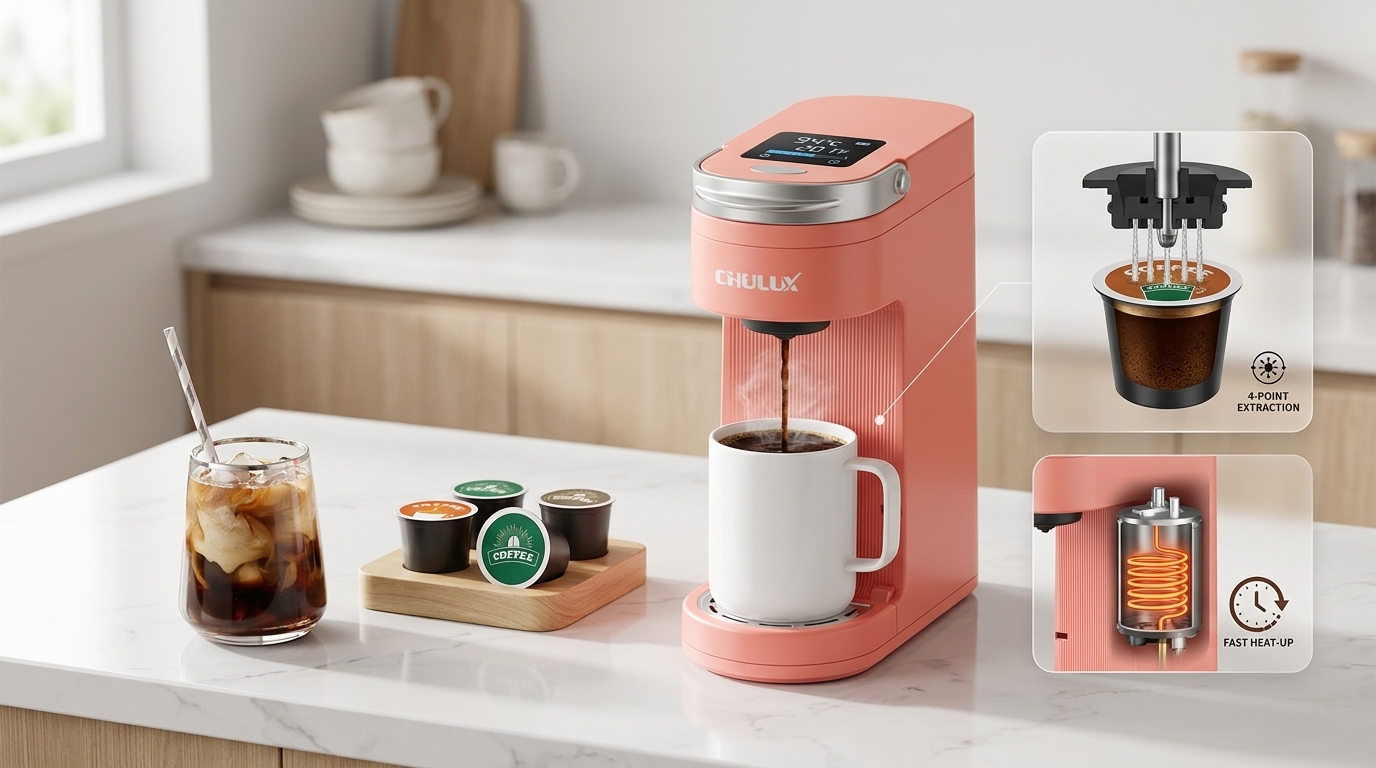
One machine that appears frequently in conversations about compact brewing is the CHULUX Slim Single Serve Coffee Maker designed for K-Cup compatibility. This article explores what makes single-serve coffee makers appealing, how they function, what features matter when selecting one, and where a machine like this fits into the broader landscape of coffee brewing options. Our goal is to provide you with the information needed to make an informed decision about whether this style of coffee maker aligns with your needs and preferences.
The Rise of Single Serve Coffee Culture
Before examining specific machines, it’s worth understanding why single-serve coffee makers have become so prevalent. The shift wasn’t accidental; it responded to genuine changes in how people live and work.
The traditional coffee maker, the kind that brews an entire pot regardless of how many people need coffee, made sense in offices with dozens of employees and homes with large families. But modern life looks different. People live alone or in pairs more often than previous generations. Remote work means individuals can spend much of their day outside traditional office environments. Travel has become more common, and temporary housing situations more frequent.
Into this environment stepped single-serve technology, which promised efficiency without waste. Rather than brewing a twelve-cup pot for one person, creating waste and requiring someone to drink several cups just to avoid throwing out stale coffee, single-serve systems brew exactly what’s needed in the moment. This efficiency appeals not just to people living alone, but to households where different family members prefer different coffee types or strengths, where some people drink coffee and others don’t, or where schedules mean people brew coffee at different times throughout the day.
Key Features to Understand in Single Serve Coffee Makers
When examining any single-serve machine, several features consistently emerge as important. Understanding these helps explain why certain machines appeal to certain users.
Boiler System and Heating Speed
The boiler system of a coffee maker determines how quickly water heats and how consistently that temperature is maintained. Machines vary significantly in this regard. Some use a traditional heated reservoir where water sits and gradually comes to temperature. Others employ more advanced systems designed to minimize the wait time between deciding you want coffee and actually holding a cup.
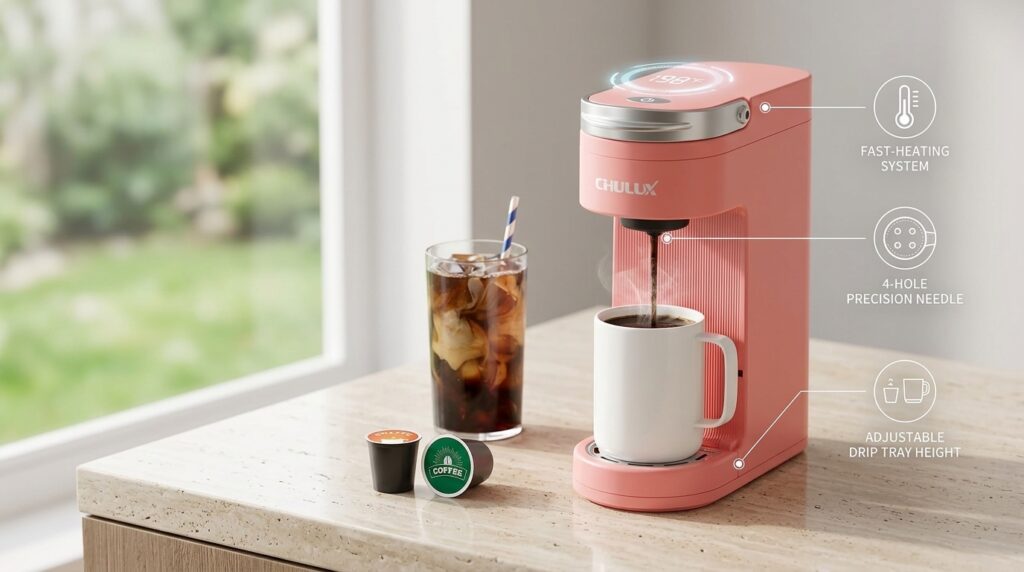
The CHULUX model emphasizes what it calls a “fast-heating boiler system.” This feature directly addresses one of the common frustrations with coffee makers: waiting. Modern life often feels rushed, and the ability to have coffee ready within a minute or two rather than five or more minutes holds real value for many people. A quick-heating system means less time spent standing in the kitchen and more time getting to the things you need to do.
The Brewing Needle and Flavor Extraction
Perhaps less obvious to casual coffee drinkers is the design of the needle or puncture system that pierces the K-Cup pod. This might seem like a minor detail, but it actually affects the quality of what ends up in your cup.
A standard single-needle system pierces the pod in one location. The CHULUX model features what’s described as a “4-hole needle” system. The purpose of multiple puncture points is to improve water distribution across the grounds contained within the pod. When water can reach grounds from multiple angles rather than being limited to a single entry point, extraction becomes more thorough and even. This translates to more complete flavor development and a richer cup than you might get from a simpler puncture system.
This distinction illustrates something important: not all single-serve machines are created equal. The engineering choices manufacturers make ripple through to the actual experience of drinking the coffee.
Adjustable Drip Capability
Another feature present in this model is an adjustable drip system. This might seem like a minor consideration, but it addresses a practical reality: people like to drink coffee from different types of vessels. Some prefer small espresso-style cups for concentrated coffee. Others want a tall mug filled with a more diluted brew. Some people don’t use mugs at all—they might want to brew directly into a travel tumbler.
An adjustable drip setting allows the brewing apparatus to accommodate different cup heights and styles. This flexibility means the machine works for more people and more situations without requiring workarounds or modifications.
Compact Size and Design
The model emphasizes its “slim” design and “compact size.” In our current context, where living spaces range from sprawling suburban homes to modest apartments and tiny houses, physical footprint matters. A coffee maker that occupies half of your counter space creates stress and tension in that environment. A machine that fits neatly into the corner of a shelf or takes up minimal counter real estate aligns better with how many people actually live.
The salmon pink color option also deserves mention. Coffee makers have historically come in black, stainless steel, or white. The introduction of color options reflects a shift in how people view small appliances. Rather than purely utilitarian objects that should disappear into the background, machines are increasingly expected to be design elements that reflect personality and aesthetic preferences.
How Single Serve K-Cup Systems Work
To fully appreciate what a machine like this does, it helps to understand the basic mechanics of K-Cup brewing.
A K-Cup is a small sealed pod containing ground coffee and a paper filter, designed specifically for single-serve machines. The pod is constructed with an opening at the top (which the brewing needle punctures) and a mesh filter at the bottom (where brewed coffee flows out). When you place a pod in the machine and start the brewing cycle, hot water is injected into the pod from above, passes through the grounds, extracts flavor and oils, and flows out the bottom into your waiting cup.
This system offers several advantages over some alternative brewing methods. First, it’s consistent. Each pod contains roughly the same amount of coffee, so each cup you brew will be reasonably similar to the last one. Second, it’s tidy. The grounds stay contained within the pod, so there’s no messy cleanup with ground coffee on your counter or sink. Third, it’s flexible. Manufacturers produce K-Cups in hundreds of varieties, from basic medium roasts to specialty single-origin beans to flavored coffees to non-coffee beverages like tea and hot chocolate.
The heating and delivery system of a machine like the CHULUX determines how effectively these mechanical principles are executed. The faster and more evenly the water heats, the more thorough the extraction. The better designed the needle and water distribution system, the more completely that water contacts the grounds.
Practical Applications and Use Cases
Single-serve coffee makers fit into specific lifestyle scenarios more naturally than others. Understanding where they excel helps determine if this type of machine makes sense for your situation.
The Solo Household
A person living alone faces a genuine mismatch with traditional coffee makers. Brewing four to twelve cups when you only want one creates waste and requires either consuming more coffee than desired or dealing with stale, deteriorating coffee throughout the day. A compact single-serve machine solves this problem directly. You brew exactly one cup each time, fresh, without any waste.
The Mixed-Preference Household
Homes where different people have different coffee preferences—one person wants espresso-strength black coffee, another prefers a weak latte, a third wants decaf, and possibly someone else doesn’t drink coffee at all—benefit significantly from single-serve technology. Rather than negotiating a compromise or brewing multiple pots, everyone can have exactly what they want.
The Office or Small Workspace
Offices too small for a full communal coffee setup, or workers who need coffee at different times throughout the day, can find a single-serve machine useful. Someone can brew coffee for themselves without making more than they need or disrupting others’ schedules.
The Space-Conscious Setting
Small apartments, studio spaces, dorm rooms, and temporary housing situations all benefit from appliances that don’t monopolize counter or cabinet space. A slim, compact machine occupies far less real estate than larger alternatives.
Travel and Temporary Living
People who travel frequently, spend time in short-term rentals, or maintain multiple residences sometimes appreciate compact brewing solutions that can be easily transported or fit into temporary quarters.
The Lifestyle Integration
Some people enjoy the ritualistic aspect of single-serve brewing. Rather than “coffee making” being a chore you do once for the entire household, it becomes something you do for yourself each time you want coffee. This personal, individual approach appeals to some personality types.
Who Might Find This Type of Machine Suitable
Certain characteristics and situations make single-serve K-Cup machines a particularly good fit.
People who prioritize convenience and speed often appreciate these systems. If your morning routine is rushed and every minute counts, brewing coffee in under two minutes rather than five to ten makes a meaningful difference to how your morning unfolds.
Environmental-minded individuals should consider both benefits and drawbacks. On one hand, single-serve machines waste nothing—you brew only what you drink. On the other hand, the K-Cup pods themselves create waste. This is an important consideration if environmental impact influences your purchasing decisions. Many companies now produce recyclable or compostable pods, though these cost more, and this option isn’t universally available.
People with strong beverage preferences find value in the flexibility. If you like trying different coffees, exploring various roasts and origins, or don’t always want coffee at all, the variety of available pods offers appealing options.
Those living in smaller spaces benefit from the compact footprint. Urban dwellers, people in apartments, and anyone with limited counter space find these machines particularly valuable.
People who live alone or in households with different schedules appreciate the simplicity of brewing one cup at a time when needed rather than operating on a household schedule.
Important Considerations and Potential Limitations
While single-serve machines offer genuine benefits, they’re not universally ideal. Several factors worth considering before purchasing.
K-Cup Pod Economics
K-Cups cost more per cup than ground coffee brewed in traditional machines. When you calculate the actual cost of the coffee inside each pod plus the cost of manufacturing and packaging the pod, the per-cup expense is generally higher than buying beans or ground coffee in bulk. For people who drink many cups of coffee daily, this cost differential accumulates. Some machines now include the option to use refillable pods with your own ground coffee, which addresses this concern partially, though not all single-serve machines offer this flexibility.
Environmental Impact of Pods
Even with improvements in pod design, the environmental footprint of single-use pods exceeds that of bulk coffee. Each pod represents a small amount of packaging waste. Over a year, someone drinking several cups daily using disposable pods generates noticeable refuse. People for whom environmental impact is a priority should factor this into their decision. The availability of recyclable or compostable pods helps, but these aren’t universally available and cost more.
Limited Customization
While K-Cup machines offer variety in coffee types, they limit customization of brewing parameters. You can’t adjust grind size, brewing time, or water temperature the way you can with manual pour-over methods or machines with more extensive controls. For coffee enthusiasts who enjoy experimenting with brewing variables, this represents a limitation.
Pod Availability and Compatibility
K-Cup technology is the dominant format, but it’s not universal. Some machines use proprietary pods or different systems entirely. If compatibility is important to you—if, for instance, you want access to a wide variety of specialty pods—you should verify that your chosen machine works with readily available, widely distributed pod types.
Machine Maintenance and Descaling
Like all coffee makers, single-serve machines require periodic maintenance. Mineral deposits from water accumulate inside machines over time, affecting performance and longevity. Machines should be descaled regularly using appropriate descaling solutions. Anyone purchasing a machine should understand this maintenance requirement and factor it into their decision.
Comparing Single-Serve Systems to Other Brewing Methods
Single-serve machines represent one point on a spectrum of coffee brewing options. Understanding how they compare to alternatives helps contextualize their strengths and limitations.
Traditional Drip Coffee Makers
The conventional coffee maker brewed a full pot of coffee remains popular and offers certain advantages. A large pot is more economical per cup of coffee, and it requires less active attention—you can brew a full pot and drink from it throughout the morning. Traditional drip machines tend to be less expensive upfront than single-serve machines and require less maintenance. However, they waste coffee for solo drinkers and don’t accommodate varied preferences within households.
Pour-Over Methods
Manual brewing methods like pour-over offer significant customization and control. Enthusiasts can adjust grind size, water temperature, brewing time, and other variables to fine-tune their cup. This appeals to people who enjoy the craft and creativity of coffee brewing. However, pour-over methods require more time, attention, and skill than automated machines, and they lack the convenience factor that makes single-serve machines appealing.
Espresso and Super-Automatic Machines
True espresso machines and their automatic cousins offer the ability to craft specialty beverages like lattes and cappuccinos. They appeal to people who enjoy café-style drinks at home. However, these machines are typically expensive, require significant counterspace, demand regular maintenance, and involve a steeper learning curve than single-serve alternatives.
French Press
French press brewing produces a full-bodied cup and offers simplicity and affordability. However, like pour-over, it requires active involvement and doesn’t brew as quickly as automated systems. It also produces grounds that need cleaning, which some people find inconvenient.
Turkish Coffee Methods
Stovetop and traditional Turkish coffee brewing methods produce distinctive, concentrated coffee but require hands-on attention and careful technique.
Each method serves different priorities and appeals to different types of people. Single-serve machines excel at providing speed, consistency, and convenience, with flexibility in coffee variety. They’re less ideal if your primary priorities are cost minimization, environmental impact reduction, or customization of brewing parameters.
Features and Capabilities of the CHULUX Model
Looking at this specific machine, several design choices merit attention.
The fast-heating boiler system addresses one of the common frustrations users express about coffee makers: the wait. When someone wants coffee, they generally want it now, not in five minutes. This feature particularly appeals to people with busy mornings or those who value speed.
The 4-hole needle system for brewing represents thoughtful engineering. Rather than relying on a single contact point between water and grounds, multiple injection points promote more even saturation and extraction. In practical terms, this means the coffee in your cup will have more consistent flavor and potentially better extraction from the grounds.
The adjustable drip capability addresses a real usability issue. Coffee drinkers use different types of vessels. Some prefer small, concentrated cups; others want large mugs. Some pour into travel tumblers with unusual dimensions. An adjustable drip accommodates this diversity without requiring someone to hold a cup in an awkward position or risk spills.
The compact footprint and slim design acknowledge that not everyone has generous counter space. Design-conscious color options like salmon pink represent a shift in how manufacturers approach appliances—as objects that should reflect personal style, not just function.
The K-Cup compatibility ensures access to a vast library of available pod varieties, from standard coffees to teas, hot chocolate, and specialty beverages. This compatibility with an established ecosystem of products provides flexibility.
Common Questions About Single Serve Coffee Makers
How Long Does Brewing Actually Take?
From the moment you insert a pod and press start, brewing typically takes between one and three minutes, depending on the machine and the specific brewing method. Some machines preheat automatically; others require a brief preheating period before you begin. The advertised “fast-heating” systems reduce this time compared to machines with slower heating elements.
Do K-Cups Work in Any Machine?
Standard K-Cup pods work in most single-serve machines designed for K-Cup compatibility. However, some manufacturers produce proprietary pod systems that work only in their machines. It’s important to verify compatibility when purchasing. The vast majority of widely available machines use the standard K-Cup format, so compatibility is generally not an issue with mainstream options.
How Much Water Does a Typical Brew Use?
Machines typically brew cups ranging from about six to twelve ounces. Most allow some adjustment of the brewing amount. Some machines offer multiple size options, allowing you to brew smaller or larger cups as desired.
Can You Use Your Own Coffee in These Machines?
Some machines include a refillable pod option that allows you to fill it with your own ground coffee. However, not all machines offer this feature. If this flexibility is important to you, verify before purchasing that your chosen machine supports refillable pods.
How Often Should You Descale?
Descaling frequency depends on water hardness in your area. In areas with soft water, descaling every three to six months might suffice. In areas with hard water, monthly descaling might be necessary. Machines typically include indicators or instructions for descaling. Using filtered or distilled water can reduce mineral buildup and extend the time between descaling.
Are These Machines Reliable?
Single-serve machines are generally reliable appliances. However, like all mechanical devices, they can experience failures. The most common issues involve scaling (mineral buildup) affecting performance, or, less frequently, mechanical failures in the pump or heating element. Regular maintenance significantly extends machine lifespan and prevents most issues.
How Loud Are They?
Most single-serve machines operate at moderate noise levels, comparable to traditional coffee makers. Some are quieter; others produce more noise. If noise during early mornings concerns you, you might want to consider this factor, though it’s not typically a major issue.
Can You Brew Hot Water for Tea?
Many single-serve machines can dispense hot water directly, allowing you to brew tea or other hot beverages using the machine’s heating system. Some models specifically support this feature; others don’t. If this functionality appeals to you, verify it’s available in your chosen machine.
Making Your Decision
Selecting a coffee maker is a personal decision based on your specific circumstances, preferences, and values. Single-serve K-Cup machines represent one option within a broader landscape of brewing methods.
These machines excel at delivering convenience, speed, and consistency. They produce good coffee without requiring special skills or knowledge. They accommodate varied preferences within households. They work well in space-constrained environments. They provide flexibility through the vast variety of available pods.
They’re less ideal if your primary concerns are cost minimization, environmental impact reduction, or brewing customization. They require regular maintenance to prevent mineral buildup. They produce pod waste that, while manageable, exceeds that of bulk coffee brewing methods.
The decision ultimately depends on how these factors align with your values, lifestyle, and priorities. Someone living alone in a small apartment who values speed and convenience might find significant value in a single-serve machine. Someone who brews multiple cups daily and prioritizes cost-efficiency might find a traditional drip maker more suitable. Someone passionate about exploring brewing methods and coffee origins might prefer manual techniques.
Understanding what a machine can do, what its limitations are, and how it aligns with your actual life circumstances enables you to make a decision you’ll feel good about over the machine’s lifespan.
Conclusion
The CHULUX Slim Single Serve Coffee Maker represents a particular approach to home coffee brewing: emphasizing speed, convenience, consistency, and space efficiency. Its design choices—the fast-heating boiler, the multi-point brewing needle, the adjustable drip, the compact footprint—reflect thoughtful engineering aimed at addressing common user frustrations with coffee makers.
Whether this machine, or single-serve brewing in general, aligns with your needs depends on your specific circumstances and priorities. For someone seeking quick, convenient, mess-free coffee brewing with flexibility in variety, this category of machine offers genuine benefits. For someone prioritizing cost minimization or environmental considerations, the trade-offs might not feel worthwhile.
Single-serve machines have found their place in the coffee-brewing landscape by solving specific problems well. They’re not the right solution for everyone, but for the right person in the right situation, they can significantly improve the daily coffee experience.