Introduction
Coffee makers have been a kitchen staple for decades, and while technology has evolved dramatically, some of us still appreciate the charm of vintage-inspired design paired with modern conveniences. The Nostalgia Retro 12-Cup Programmable Coffee Maker sits at an interesting intersection—it combines the aesthetic appeal of mid-century styling with practical features designed for today’s lifestyles. Whether you’re someone who values retro décor, needs to brew coffee for a larger household, or simply wants to understand what makes this particular model appealing, this guide explores what you should know about it.
The aqua color option, in particular, has become increasingly popular among people looking to add a pop of personality to their kitchens while maintaining functional appliances. But beyond the appearance, there’s quite a bit to understand about how this coffee maker functions and whether it aligns with your brewing needs and preferences.
Key Features Explained
The 12-Cup Capacity
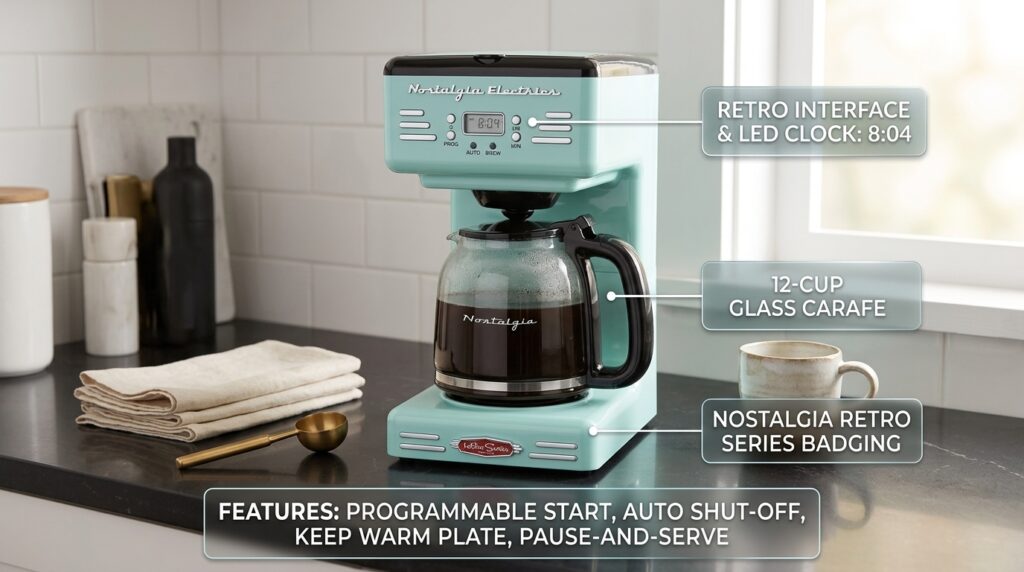
The 12-cup capacity is one of the first details people notice. For context, in coffee maker terminology, a “cup” typically refers to a 5-ounce measurement rather than a standard 8-ounce mug. This means the carafe holds approximately 60 ounces of brewed coffee. For households with multiple coffee drinkers, evening gatherings, or those who like to brew a batch and enjoy it throughout the morning, this capacity provides flexibility without requiring frequent brewing cycles.
This larger capacity can be particularly practical if you work from home and want to brew once in the morning, or if you have family members with different schedules but want everyone to have access to fresh coffee without individual brewing sessions.
Programmable Brewing Function
The programmable feature allows you to set a brewing time in advance. This means you can prepare your coffee maker the night before with water and grounds, set a timer for 6:30 AM, and wake up to a freshly brewed pot without any effort. This functionality has become standard in many modern coffee makers, but it remains valuable for people who want to streamline their morning routine.
The practical benefit here is straightforward: by the time you’ve showered and dressed, your coffee is ready. This eliminates the wait time between waking up and having your first cup, which many people find appealing.
LED Display
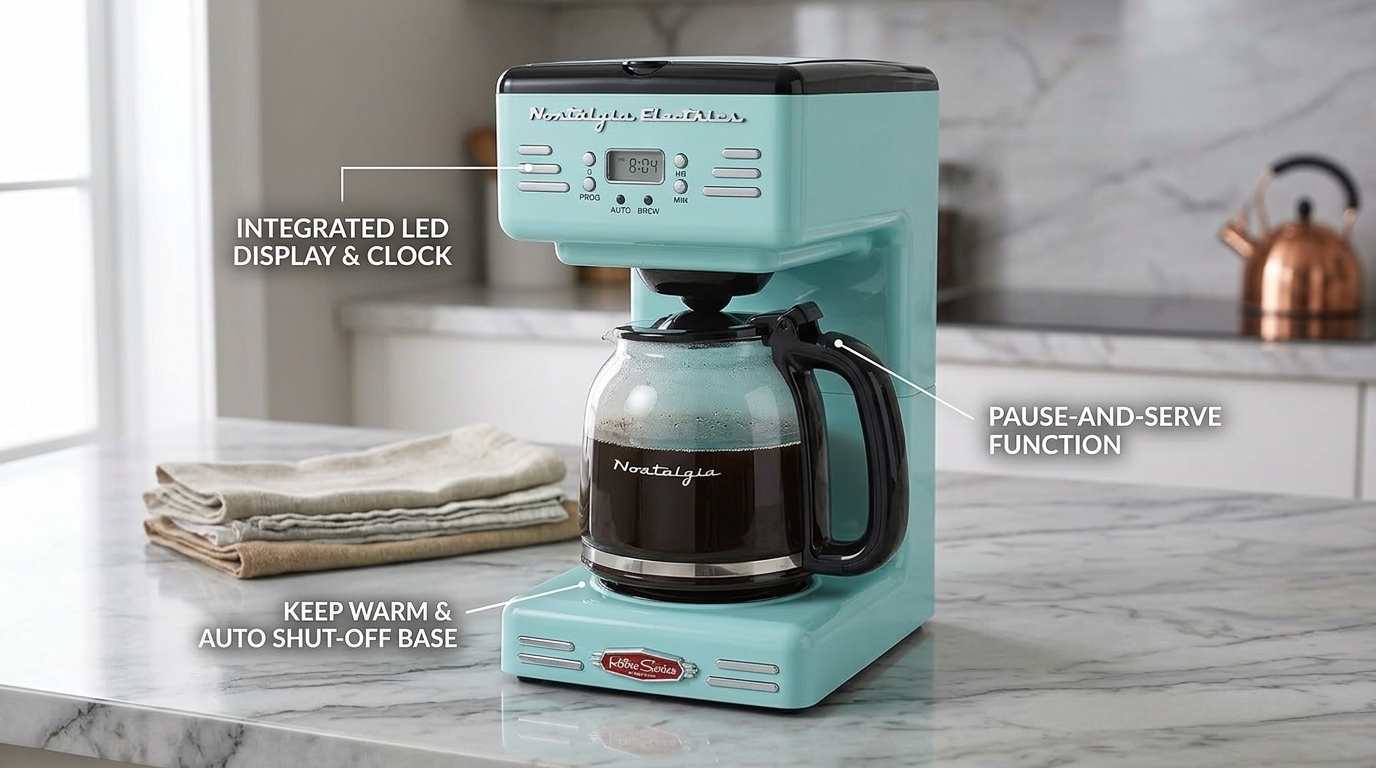
The LED display provides clear visibility of the settings and timer. Rather than fumbling with buttons to set the brew time, you can read the display to confirm your programming is correct. The display typically shows the time of day and your programmed brew time, making it easy to adjust settings as needed.
This feature contributes to overall usability, particularly if you’re setting the timer in low-light conditions or if you prefer clear visual feedback when adjusting any appliance.
Automatic Shut-Off Feature
The automatic shut-off function turns off the heating element after a period of time once brewing completes. This is a safety feature designed to prevent the carafe from overheating if you forget about the coffee. Depending on how the system works, this typically occurs after the coffee has brewed and been sitting on the warming plate for an extended period.
From a practical standpoint, this feature provides peace of mind. If you start brewing and then get absorbed in morning activities or a project, you don’t have to worry about the heating element staying on indefinitely.
Keep Warm Function
Separate from automatic shut-off, the keep-warm function maintains the brewed coffee at a drinkable temperature for an extended period. Rather than the coffee cooling down naturally in the carafe, the warming plate keeps it heated.
It’s worth noting that even with a warming plate, coffee quality does degrade over time. The longer coffee sits on a heat source, the more the flavors can become muted or develop a slightly bitter edge. Most coffee enthusiasts recommend consuming brewed coffee within 30 minutes to an hour for optimal taste, though the warming function certainly extends the window during which the coffee remains hot.
Pause-and-Serve Function
The pause-and-serve feature allows you to pause the brewing cycle temporarily and remove the carafe to pour a cup before brewing completes. This is helpful if you absolutely need a cup of coffee before the full pot is done. When you return the carafe, brewing resumes.
This function adds convenience for people who find waiting difficult, though it does interrupt the brewing process momentarily. The interruption is typically brief enough that it doesn’t significantly impact the final result.
How This Coffee Maker Fits Into Daily Life
For Morning Routines
If you’re someone who values efficiency in the morning, programming this coffee maker the night before means one less decision and action required when you wake up. You can focus on other aspects of your routine—exercise, shower, breakfast—while knowing your coffee will be ready.
This appeal extends beyond pure convenience. There’s something to be said for having a familiar, reliable ritual. Programming your coffee before bed can become part of your evening wind-down routine, and waking to the aroma of fresh coffee is a sensory experience many people appreciate.
For Entertaining
When hosting gatherings—whether a book club meeting, casual brunch, or family get-together—brewing a full 12-cup pot ensures you have enough coffee available without needing to make multiple batches. Guests can pour themselves as needed throughout the gathering, reducing the need for constant refreshing.
For Shared Households
In homes where multiple people wake at different times, programming a single early morning brew provides coffee for the early riser while the full pot remains available (and warm) for others who wake later. This can reduce the need for multiple brewing cycles and the resulting water and electricity usage.
For Work-from-Home Scenarios
If your home office is your primary workspace, having access to a large pot of coffee during your work hours means fewer trips to brew or visit a coffee shop. You can refill your mug throughout the day as needed without the distraction of brewing multiple small batches.
Who Might Find This Coffee Maker Suitable
Aesthetic-Conscious Decorators
People who intentionally design their kitchens with a retro or vintage theme naturally gravitate toward appliances that support that aesthetic. A retro-styled coffee maker in aqua works as a design element, not just a functional tool. If you have other mid-century or vintage-inspired kitchen items, this coffee maker would complement them cohesively.
Larger Households
Families of four or more people, or those who regularly have houseguests, benefit from the 12-cup capacity. Rather than being a feature you rarely use, the size becomes practically essential.
People Who Enjoy Consistency
If you prefer having a reliable, uncomplicated brewing method rather than experimenting with different coffee makers or brewing techniques, a straightforward programmable coffee maker aligns with that preference.
Budget-Conscious Consumers
Retro-styled coffee makers often appeal to people who want a functional appliance at a reasonable price point. If you’re comparing various coffee makers, models with straightforward features tend to be more affordable than those with advanced programming, multiple brew strength options, or specialized brewing technologies.
Those Seeking Kitchen Personality
Beyond just function, some people view kitchen appliances as opportunities to express personal style. A distinctly colored coffee maker like the aqua option can serve as a conversation piece or a deliberate choice to make your kitchen feel more personalized.
Important Considerations Before Making a Decision
Water Temperature and Brewing Consistency
Standard coffee makers like this one brew by heating water and passing it through grounds. They’re effective for everyday coffee drinking, though they may not reach the precise water temperatures preferred by coffee enthusiasts. If you’re particular about extraction temperature or coffee-to-water ratios, you might want to research this model’s specific specifications.
Carafe Durability
The carafe on most coffee makers experiences regular thermal stress from heating and cooling cycles. Over time, glass carafes can develop small cracks or cloudiness. Consider whether you’d be comfortable replacing the carafe if needed, or whether you’d prefer a model with a more durable carafe material.
Cleaning and Maintenance
A 12-cup capacity means more surface area to clean, particularly inside the carafe. Hard water deposits can accumulate on heating elements and inside tubing over time. Regular descaling—typically recommended every few months depending on water hardness—keeps the machine functioning optimally. Factor in whether you’re comfortable performing basic maintenance tasks.
Space Requirements
A 12-cup coffee maker is larger than single-serve or smaller capacity models. Ensure you have adequate counter space for it, and that it fits within your kitchen layout without crowding other appliances.
Brewing Time
While not a drawback for most people, brewing a full 12-cup pot takes longer than brewing 4-6 cups. If you typically wake up and want coffee immediately, the programmable feature becomes more important for your workflow.
Filter Type and Availability
Standard coffee makers typically use either disposable paper filters or permanent mesh filters. Consider which type you prefer and whether the filters for this model are readily available and affordable where you shop.
Comparison With Other Coffee Maker Categories
Understanding where this model fits within the broader coffee maker landscape helps contextualize its strengths and trade-offs.
Versus Single-Serve Coffee Makers
Single-serve machines brew individual cups quickly and offer convenience for people with varying coffee preferences in one household. However, they generate more waste (if using disposable pods), have higher per-cup costs, and take up counter space relative to their capacity. The 12-cup programmable machine is more economical for households where multiple people drink coffee regularly.
Versus Full-Featured Programmable Machines
Some programmable coffee makers include features like adjustable brew strength, multiple brewing options, or integrated grinders. These offer more customization but typically cost more and have greater complexity. The Nostalgia model takes a more straightforward approach, which appeals to people who prefer simplicity and don’t need those advanced options.
Versus Pour-Over or Manual Brewing Methods
Manual brewing methods—pour-over, French press, or Moka pot—give users complete control over brewing variables and often result in excellent coffee quality. However, they require active participation and attention. A programmable coffee maker trades some control for convenience and consistency, which is a worthwhile trade-off for people prioritizing ease of use.
Versus Thermal Carafe Models
Some coffee makers use insulated thermal carafes instead of glass carafes with warming plates. Thermal carafes maintain temperature without continuous heating, which can preserve coffee flavor better. However, thermal carafe machines are typically pricier and less aesthetically distinctive. The glass carafe with warming plate design in this model is classic for good reason—it’s visible, replaceable, and conventional.
Frequently Asked Questions
Q: How long does it take to brew a full 12-cup pot? A: Brewing time typically ranges from 8-12 minutes, depending on the specific model and water temperature, though exact timing can vary. This is standard for programmable coffee makers of this size.
Q: Can I use this coffee maker with a water filter? A: Yes, most people using this style of coffee maker use filtered water, either from a pitcher filter or tap-mounted system. Some also use filtered water specifically to reduce mineral buildup in the machine. This is compatible with the coffee maker itself.
Q: What’s the best way to clean it? A: Regular cleaning involves rinsing the carafe and filter basket after each use. For descaling, most manufacturers recommend using a solution of white vinegar and water run through a brew cycle every few months, or more frequently in hard-water areas. Always refer to the specific user manual for detailed instructions.
Q: Does it work well for making iced coffee? A: You can brew coffee in this machine and let it cool to use over ice, though it’s not optimized for iced coffee specifically. Some people prefer brewing directly into a carafe with ice, which you can do by carefully removing the carafe during brewing with the pause-and-serve feature.
Q: Is the LED display easy to read? A: LED displays are generally clear and easy to read in most lighting conditions, though some people find traditional buttons and simple dials easier to use. The specific brightness and clarity would be something to evaluate if you have the opportunity to see the model in person.
Q: What happens if the water reservoir runs dry during brewing? A: If the water runs out before brewing completes, brewing simply stops. The machine doesn’t have an automatic shutoff based on completion—you’ll need to refill and restart, or simply wait until the next programmed brew time.
Q: Is there a warranty, and what does it typically cover? A: Warranty details vary by retailer and region. Most coffee makers come with a manufacturer’s warranty covering defects in materials or workmanship, typically for one year. Check the specific terms where you purchase.
Q: Can the programming be retained if there’s a power outage? A: This depends on the model’s design. Some coffee makers lose programming during power outages, while others retain it. This is a practical detail worth confirming if you experience frequent power interruptions.
Conclusion
The Nostalgia Retro 12-Cup Programmable Coffee Maker represents a particular approach to coffee brewing—one that prioritizes reliability, capacity, and retro styling over cutting-edge features or precise brewing control. It’s designed for people who want straightforward functionality, adequate capacity for multiple users, and the visual appeal of vintage-inspired kitchen design.
Whether this coffee maker is right for you depends on several factors: your household’s coffee consumption, your design preferences, the amount of counter space you have available, and your comfort with basic appliance maintenance. If you’re drawn to retro aesthetics, need capacity for multiple coffee drinkers, and prefer uncomplicated operation, this model merits consideration.
For those still deciding whether this particular coffee maker matches their needs, I’d recommend thinking through your typical morning routine, considering how you currently brew coffee, and evaluating whether the features and capacity address your specific pain points. Sometimes the best kitchen appliance isn’t the one with the most features—it’s the one that fits seamlessly into your life.