Introduction
The morning coffee ritual looks different for everyone. Some people appreciate the ceremonial nature of brewing a full pot, while others simply want a quick, hassle-free cup before heading out the door. Over the past decade, single-serve coffee makers have carved out a significant space in the American kitchen, and for good reason. They address a fundamental challenge: how to get a fresh, hot cup of coffee without the waste and complexity of traditional drip brewing.
Single-serve systems operate on a straightforward principle. Rather than preparing enough coffee for eight or ten cups, you brew only what you need—whether that’s six ounces or twelve. This approach appeals to various households, from solo coffee drinkers to families with different coffee preferences under one roof. The Keurig K-Compact represents one popular option in this category, designed with simplicity and accessibility in mind.
Understanding what this machine offers and how it fits into your lifestyle requires looking beyond marketing language. This guide explores the features, practical applications, and real-world considerations that matter when evaluating whether a single-serve coffee maker makes sense for your situation.
What Makes Single-Serve Coffee Brewing Different
Before diving into the specifics of any particular model, it’s worth understanding the fundamental difference between single-serve and traditional brewing methods. A conventional drip coffee maker heats water, passes it through a filter basket containing ground coffee, and collects the brewed liquid in a carafe. The entire process produces multiple servings at once—whether anyone plans to drink them immediately or not.
Single-serve systems work through a different mechanism. Instead of ground coffee in a filter basket, these machines use pre-packaged K-Cup pods or capsules. When you insert a pod into the brewer, a mechanism punctures the top and bottom of the pod, allowing hot water to flow through the pre-measured coffee grounds and directly into your cup. The brewing time is typically compressed compared to traditional methods, often completing in under two minutes from start to finish.
This fundamental difference creates several cascading effects on how people use these machines, from convenience factors to waste considerations.
Key Features of the Keurig K-Compact
The K-Compact design emphasizes a no-frills approach to single-serve brewing. Understanding what this model actually provides helps set realistic expectations about what your morning coffee routine would look like.
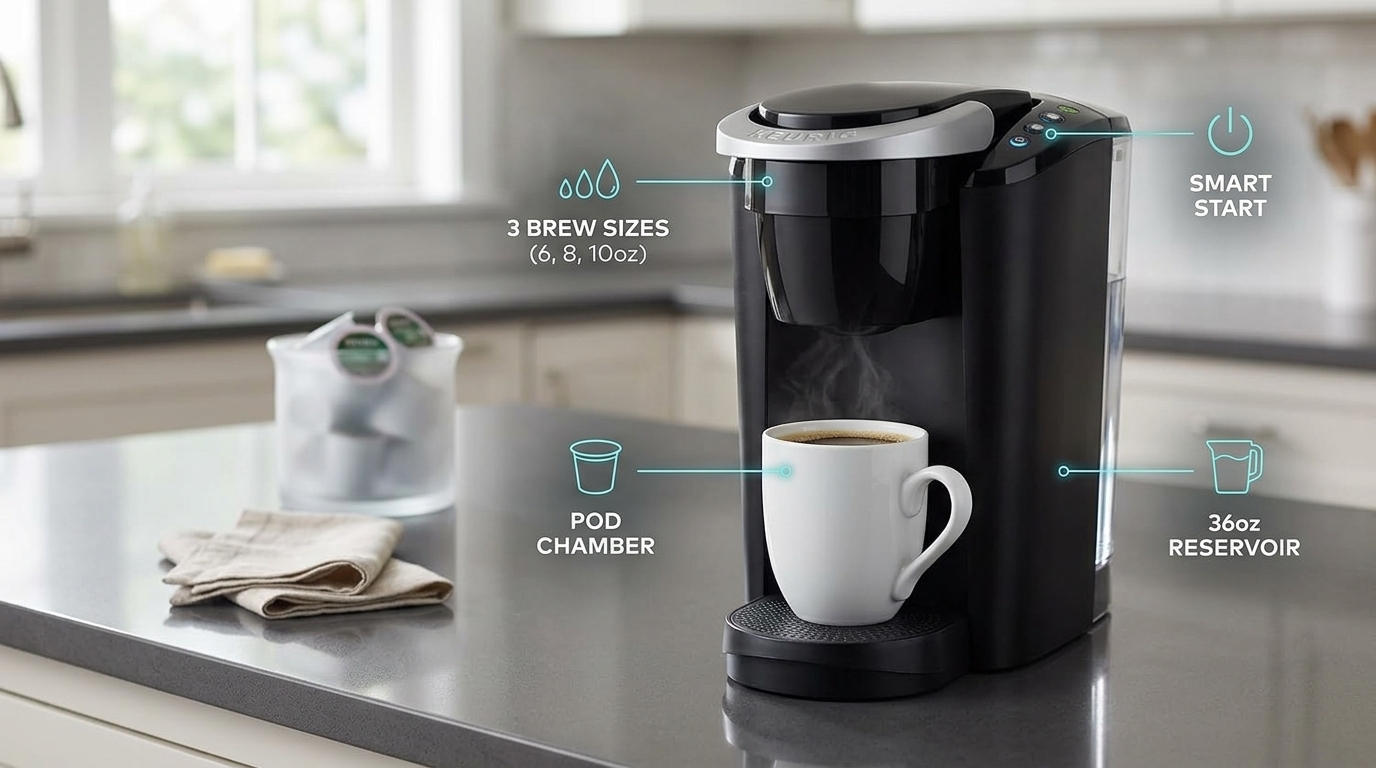
Compact Footprint
The word “compact” isn’t accidental marketing language here—this machine is genuinely smaller than many coffee makers on the market. This matters practically if you have limited counter space, share a small kitchen, or prefer a streamlined appearance. Compact machines typically occupy less surface area, which can be the difference between fitting on a dorm room desk or not fitting at all.
Three Brew Size Options
This machine offers three preset brew sizes: typically six ounces, eight ounces, and ten ounces. These options acknowledge a reality that every coffee drinker knows: people have different mug sizes and preferences for coffee strength. Six ounces delivers a small, concentrated cup. Eight ounces provides a standard coffee cup volume. Ten ounces fills a larger mug or travel cup.
The ability to adjust brew size without adding complexity is genuinely useful. Rather than manually programming measurements or guessing at water levels, you select your size and press brew. The machine handles the rest.
Smart Start Feature
The Smart Start technology deserves explanation because it’s genuinely practical, though not flashy. This feature allows you to set up your machine to automatically brew at a scheduled time. Insert your pod in the evening, set the timer, and wake up to ready-to-drink coffee. This works particularly well for people whose morning routine feels rushed or for anyone who values that first cup being ready immediately upon waking.
This isn’t connected to Wi-Fi or controlled from your phone—it’s straightforward scheduled brewing built into the machine itself. That simplicity is intentional.
36-Ounce Removable Reservoir
The water reservoir holds enough for approximately three to four cups of coffee (depending on which brew size you select) before requiring refilling. A 36-ounce capacity balances convenience against the compact design. You don’t need to refill after every single cup, but it’s also small enough that the machine remains genuinely compact.
The removable feature matters more than you might initially think. Cleaning the reservoir properly—essential for water quality and machine longevity—requires being able to access the entire interior. A removable reservoir makes this straightforward. You simply lift it out, rinse it thoroughly, and replace it.
How Single-Serve Brewers Fit Into Daily Life
Coffee habits vary enormously, and understanding how a single-serve brewer might actually integrate into your routine requires thinking beyond the novelty factor.
Solo Households and Individual Drinkers
A person living alone benefits from single-serve brewing in obvious ways. Full-pot brewing creates waste and often results in coffee sitting in a carafe, growing stale throughout the morning. A single-serve system means every cup is freshly brewed, which impacts taste quality. The Keurig K-Compact’s efficiency also means less counter clutter and simpler cleanup compared to managing a traditional pot and filter basket.
Mixed Coffee Preferences in One Home
Households where different people want different coffee types—one person prefers regular coffee while another drinks flavored varieties, or someone avoids caffeine entirely—benefit substantially from single-serve systems. Rather than negotiating whose preferences take priority or brewing multiple pots, everyone can brew exactly what they want when they want it.
Busy Mornings
The speed of single-serve brewing addresses a genuine lifestyle factor. For people managing tight schedules before work or school, the five-minute investment versus fifteen minutes for traditional brewing genuinely matters. The Smart Start feature compounds this benefit by having coffee ready before your feet hit the floor.
Controlled Caffeine and Portion Intake
Some people find portion control important for health reasons or personal preference. Single-serve brewing inherently limits you to one cup at a time, which some people find helpful for managing overall caffeine intake.
Experimentation and Variety
Single-serve systems lower the barrier to trying different coffee varieties. Rather than committing an entire pot to a new brand or roast, you try a single pod. People interested in exploring specialty coffee find this approach less wasteful and more economical than traditional brewing.
Who Might Find This Machine Suitable
Various lifestyle situations point toward single-serve brewing as a practical choice.
Limited Kitchen Space
Apartments, dorm rooms, offices with kitchen areas, or any situation where counter space is premium makes the K-Compact’s small footprint genuinely valuable. Compact doesn’t mean sacrificing functionality—it means eliminating unnecessary size.
People Concerned With Waste
This might seem counterintuitive given the K-Cup pod discussion, but consider: someone brewing a full pot every morning and pouring out stale coffee throughout the day potentially wastes far more coffee than someone brewing one fresh cup at a time, even accounting for pod packaging. The waste calculation depends on individual habits.
Households With Varying Wake Times
If people in your home wake up at different times and want fresh coffee when they’re awake, individual single-serve brewing eliminates the problem of someone brewing coffee at 5 AM that sits until 7 AM.
Frequent Travelers
Portable, simple single-serve machines travel better than full brewing setups. Some people keep one at the office, in a guest room, or use it in other locations beyond their primary kitchen.
People Prioritizing Convenience Over Ceremony
Some coffee drinkers genuinely don’t enjoy the process of measuring, grinding, and monitoring a brewing cycle. They want excellent coffee without the ritual. Single-serve systems eliminate these steps entirely.
Important Considerations and Realistic Perspectives
An honest evaluation requires acknowledging that no product suits everyone, and single-serve brewing involves genuine tradeoffs.
Pod Packaging and Waste
K-Cup pods are individually packaged single-use items. The environmental impact of this packaging is legitimate and worth considering. Each pod represents plastic and aluminum that enters the waste stream. For environmentally conscious consumers, this creates tension with the efficiency gains elsewhere.
Some people address this through multi-use filters that work with single-serve systems—you fill them with ground coffee rather than using pre-packaged pods. This option exists but requires more effort than inserting a pod.
Coffee Quality Variations
Single-serve coffee quality depends almost entirely on the pods you select. Unlike traditional brewing where you control grind size, water temperature, and extraction time precisely, single-serve machines handle these variables internally. The quality of the pods themselves becomes paramount. Budget pods and premium pods produce noticeably different results.
Ongoing Costs
Pods cost more per serving than traditional ground coffee. If you brew multiple cups daily, the per-cup expense accumulates. This isn’t hidden—it’s a real ongoing cost that exceeds what you’d spend on bulk ground coffee, though it may or may not exceed your current spending depending on your current habits.
Water Heating Time
While single-serve brewers are faster than traditional methods, there’s still an initial heating period. The machine needs to reach temperature before brewing, typically adding 30-60 seconds to your wait time. If immediate gratification is essential, even this brief delay might be worth knowing about.
Machine Lifespan and Maintenance
The mineral content in tap water builds up inside any coffee maker over time. Hard water can shorten a machine’s lifespan significantly. Regular descaling—flushing the machine with a descaling solution—extends longevity but requires remembering to do it periodically. Neglecting this maintenance can result in poor performance or failure within a few years.
Single-Serve Brewing Versus Other Coffee Methods
Understanding how single-serve systems compare to other approaches provides perspective on whether this method makes sense for you.
Versus Traditional Drip Brewers
Drip brewers offer lower per-cup costs and simpler maintenance but require brewing full pots. They produce coffee whether it’s consumed immediately or not. For solo drinkers or small households, this represents genuine waste. Drip brewers don’t require proprietary pods and generate less packaging waste. The setup and cleanup are more involved.
Versus Espresso-Based Systems
True espresso machines and super-automatic machines produce different coffee than single-serve K-Cup systems. Espresso enthusiasts often consider K-Cup coffee inferior to what proper espresso equipment produces. However, espresso equipment requires significantly more skill, time, and financial investment. For most people seeking convenience over coffee connoisseurship, this comparison is academic.
Versus French Press or Pour-Over
Manual brewing methods like French presses and pour-overs require active participation and skill development but allow complete control over the brewing process and often produce excellent coffee at low cost. These methods suit people who enjoy the coffee-making ritual. They don’t suit people prioritizing speed and convenience.
Versus Instant Coffee
Instant coffee is quicker and cheaper but produces noticeably different results that most coffee drinkers find less satisfying. Single-serve systems occupy the middle ground: faster and more convenient than traditional brewing but producing better results than instant.
Practical Questions About Single-Serve Machines
Understanding how these machines work day-to-day requires addressing common practical questions.
How Long Does Brewing Actually Take?
From inserting the pod to holding a finished cup, expect three to four minutes on average, including the machine’s initial heating time. If you’ve used the machine recently, that heating time shortens because the machine remains warm.
Can You Use Any K-Cup Pod?
Yes. While Keurig manufactures their own pods, the K-Compact accepts any K-Cup compatible pod. This includes store brands, specialty coffee roasters, and various beverage options beyond coffee. This flexibility is worth emphasizing because it directly impacts cost and variety.
What Happens if the Machine Breaks?
Repair options depend on the issue. Simple problems like mineral buildup require descaling. More serious mechanical failures might warrant replacement given that single-serve machines aren’t typically expensive compared to repair costs. This differs from investing thousands in commercial espresso equipment.
Does the Smart Start Feature Really Work Reliably?
Scheduled brewing technology works as advertised—the machine will brew at the time you set. This works whether you’re home or not, though obviously cold coffee in the cup isn’t ideal if you leave for the day. Realistically, people use this feature for morning timing in their own homes.
How Often Should You Clean and Maintain the Machine?
Daily maintenance involves emptying any residual water from the reservoir. Deep cleaning with descaling solutions should happen monthly, or more frequently if you have hard water. This preventive maintenance significantly extends machine lifespan.
What’s the Actual Water Reservoir Size Compared to Brew Size?
The 36-ounce reservoir provides enough water for approximately three to four full cups before requiring refilling. You won’t need to refill after every single cup, but you will need to refill regularly if multiple people use the machine.
Understanding Your Coffee Priorities
Selecting any coffee brewing method ultimately depends on what matters most to you personally.
If your priority is minimizing the cost per cup and you drink multiple cups daily, traditional drip brewing with bulk ground coffee makes financial sense, even accounting for waste.
If your priority is experimentation and trying different coffee varieties without waste, single-serve appeals because you can brew one cup of something new before committing further.
If your priority is speed and not thinking about coffee preparation, single-serve systems eliminate variables and decisions.
If your priority is quality and control, manual methods or true espresso equipment offer more precision.
The Keurig K-Compact specifically appeals to people prioritizing simplicity, compact design, and straightforward functionality without complex programming or features they won’t use.
Final Thoughts
Single-serve coffee brewing represents one valid approach among many to your daily coffee routine. It’s not universally superior to other methods, nor is it wrong for people who prefer alternatives. The approach suits certain situations and priorities particularly well: solo households, limited spaces, mixed coffee preferences in one home, and anyone prioritizing convenience and consistency.
The K-Compact specifically emphasizes these values through its compact size, simple operation, and focused feature set. It doesn’t attempt to do everything—it does the basics well and reliably.
Whether this approach makes sense for your situation depends entirely on your actual daily life, not on marketing claims or anyone else’s preferences. If you find yourself curious about trying single-serve brewing, considering the practical factors covered here—space, cost, convenience, and waste—provides a foundation for making an informed decision that actually fits your situation.